
Did you know millions of vehicles reach the end of their life every year? This creates big environmental problems. Eco-friendly recycling and disposal are key to lessen these issues with junk cars.
We know how important it is to dispose of cars the right way. It affects our planet. As a trusted partner, we offer easy, quick cash for car sellers. We also make sure our service is clear and works well.
Choosing environment-friendly disposal helps a lot. It cuts down on the harm junk cars can do. We aim to make this process easier and better for our customers.
Key Takeaways
- Eco-friendly recycling is key to lessening the harm of junk cars.
- Proper car disposal greatly reduces our ecological footprint.
- Our service gives quick cash to car sellers.
- We make sure our service is clear and works well for everyone.
- Going for environment-friendly disposal is a simple way to help the planet.
Understanding Junk Cars and Their Impact
More and more vehicles are reaching the end of their life. This makes sustainable automotive recycling practices more important than ever. It’s key to know what makes a car “junk” and the environmental dangers it poses.
What Constitutes a Junk Car?
A junk car is one that can’t be fixed or is too old. It might be damaged or just too worn out. Finding a green way to get rid of it is very important.
- Vehicles that have been in accidents and are deemed total losses
- Cars with significant mechanical issues that make them inoperable
- Vehicles that are no longer roadworthy due to age or deterioration
Common Environmental Concerns
Junk cars can harm the environment if not disposed of right. They can leak harmful fluids and contain dangerous materials. We need to use environmentally responsible car disposal to avoid these problems.
Knowing the effects of junk cars and using green junk car removal can help a lot. It protects our planet and supports a greener car industry.
The Toxic Components of Junk Cars
Junk cars have toxic parts that harm the environment if not thrown away right. They’re not just metal and plastic. They have dangerous materials that can pollute soil, water, and air if not handled right.
Batteries and Their Hazards
Batteries in junk cars are a big risk. They have lead and sulfuric acid, which are bad for the planet. If not disposed of right, lead can get into the soil and water.
Safe disposal of lead-acid batteries is key to avoid pollution. Recycling places can handle the lead and acid safely, reusing or getting rid of them in a green way.
Fluids That Can Harm the Environment
Junk cars also have fluids that can harm the environment if not thrown away right. Engine oil, coolant, and brake fluid are examples. These can pollute water and soil if they spill.
- Engine oil can be recycled and reused, cutting down on new oil extraction.
- Coolant, or antifreeze, has ethylene glycol, which is bad for humans and animals.
- Brake fluid can also pollute soil and water if not handled right.
Heavy Metals in Junk Cars
Heavy metals like mercury, cadmium, and chromium are in junk cars. These metals are toxic and can harm the environment if not managed right.
For example, mercury is in some car switches, while cadmium is in batteries and coatings. Chromium is in steel and alloys. Recycling junk cars through eco-friendly programs makes sure these metals are dealt with safely.
Knowing about the toxic parts of junk cars and their environmental risks shows why eco-friendly car recycling is important. Proper recycling and disposal of junk cars not only cuts down on landfill waste. It also helps get valuable materials back.
The Environmental Benefits of Recycling Junk Cars
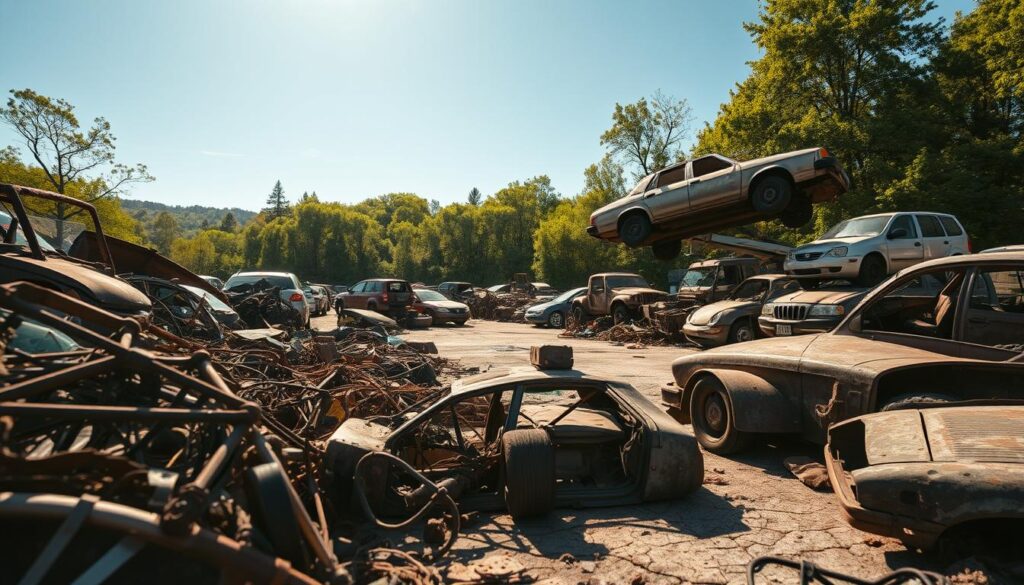
Recycling junk cars greatly reduces the harm to our environment. It not only manages waste but also saves natural resources. This is because it reuses materials found in vehicles.
Reducing Landfill Waste
Recycling junk cars cuts down on landfill waste. Cars in landfills leak harmful fluids like oil and gasoline. These can pollute soil and water. Recycling ensures these fluids are handled safely, protecting our environment.
Recovering Valuable Materials
Recycling junk cars lets us get valuable materials like metals. These can be used to make new products. This saves energy and reduces damage to the environment.
Some key benefits of recycling include:
- Conservation of Natural Resources: Using recycled metals means less need for raw materials.
- Energy Savings: Recycling metals uses less energy than making new ones.
- Reduced Emissions: Less energy used means fewer greenhouse gases.
The Process of Junk Car Recycling
The junk car recycling process is designed to be efficient and environmentally friendly. It’s not just about getting rid of old cars. It’s about finding value in them and protecting our planet.
How Recycling Facilities Operate
Recycling facilities have special tools to break down cars and sort out recyclable parts. They use the latest technology to make sure the recycling is safe and good for the environment.
Key operations include:
- Dismantling vehicles to recover usable parts
- Crushing and shredding metal components
- Separating materials such as metals, plastics, and glass
Steps in the Junk Car Recycling Process
The recycling process for junk cars has several steps, from checking the car to getting rid of what’s left. Here’s a quick look at the steps:
- Initial Assessment: Checking the car to figure out the best way to recycle it.
- Dismantling: Taking out parts that can be used again, like engines and electronics.
- Material Separation: Sorting out different materials like metals, plastics, and fluids for recycling or safe disposal.
- Crushing and Shredding: Breaking down the car’s body and metal parts into smaller pieces for easier recycling.
- Final Disposal: Making sure any leftover parts are handled in an eco-friendly way.
By taking these steps, we make sure junk cars are recycled in a way that helps our planet and community.
The Role of Legislation in Junk Car Disposal
Junk car disposal is guided by laws that encourage eco-friendly recycling. These rules are key to reducing harm to the environment.
We will look at federal and state laws that control junk car disposal. We’ll see how they affect the industry and the planet.
Federal Regulations on Junk Cars
At the federal level, several laws manage junk car disposal. These include:
- EPA Regulations: The Environmental Protection Agency (EPA) sets rules for handling hazardous materials in junk cars, like batteries and fluids.
- Resource Conservation and Recovery Act (RCRA): This act oversees the management of hazardous waste, including junk car materials.
- National Emissions Standards for Hazardous Air Pollutants (NESHAP): These standards control emissions from hazardous air pollutants, including those from junk car disposal.
These federal laws create a framework for the environmentally responsible disposal of junk cars. They ensure the process has a minimal environmental impact.
State-Level Laws Worth Noting
States also have their own laws about junk car disposal. Some key laws include:
- State-specific recycling requirements: Many states have specific recycling rules for junk cars, including recycling of parts and materials.
- Disposal bans: Some states ban junk cars from landfills, pushing for recycling instead.
- Certification programs: Certain states have certification programs for junk car recyclers. These ensure they follow environmental standards.
These state laws work with federal regulations to improve eco-friendly junk car recycling.
By following these laws, we can make sure junk cars are disposed of in a sustainable and environmentally friendly way.
Alternatives to Junking Your Car
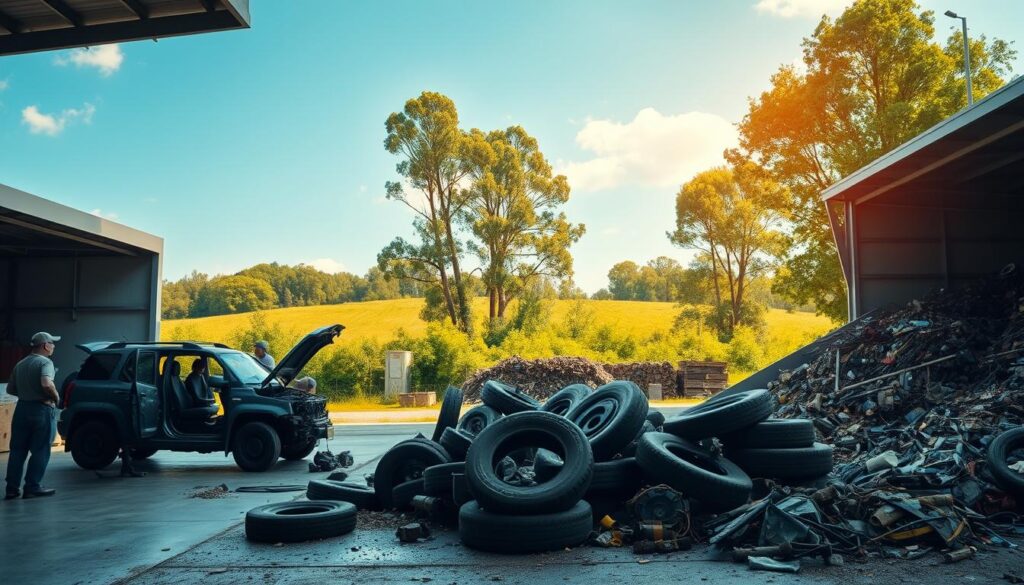
If your car is no longer good for driving, you have other choices. You can sell it to someone else or give it to a charity. Both options are better for the planet.
Selling to a Private Party
Selling your car to someone else can be a good way to make money. It’s better for the environment than junking it. To sell your car, you need to:
- Determine your car’s market value using pricing guides
- Prepare your vehicle for sale by cleaning and making any necessary repairs
- Advertise your car on reputable online marketplaces and local classifieds
By selling your car privately, you’re helping the planet. It’s a part of green junk car removal.
Donating Your Vehicle
Donating your car is another great option. Many charities take cars and use the money for their work. Donating your car helps a good cause and you get a tax break. To donate your car, you should:
- Research charities that accept car donations and choose a reputable one
- Ensure the charity provides a receipt for tax purposes
- Transfer the ownership correctly to avoid any future liabilities
Donating your car is a environmentally responsible car disposal method. It helps reduce waste and is good for the planet.
Both selling to a private party and donating your vehicle are good choices. They help reduce waste and support sustainability. By choosing one of these options, you’re making a positive impact on the environment.
How to Properly Dispose of a Junk Car
Getting rid of a junk car is more than just tossing it away. It’s about doing it right to protect our planet. We’ll show you how to do it in a way that’s good for the environment.
Finding a Reputable Junk Car Service
Finding a good junk car service is key. They should follow environmental rules. Here’s how to pick a reliable one:
- Look for certifications and licenses that show they follow environmental standards.
- Read reviews and testimonials to see what others say about them.
- Ask about their recycling methods to make sure they’re eco-friendly.
Choosing a service that cares about the planet helps lessen the junk car environmental impact.
Preparing Your Car for Pickup
Before the pickup, prepare your car:
- Take out all your stuff from the car.
- Get your car’s title and registration ready.
- Tell the service about any special conditions of your car.
These steps make the pickup easy and help the recycling process go smoothly.
At our company, we believe in eco-friendly junk car disposal. We work with services that care about the planet. Together, we can lessen the environmental harm of junk cars.
The Economic Advantages of Junk Car Recycling
Recycling junk cars is good for the environment and the economy. It shows how valuable junk car recycling is for local areas and the whole economy.
The benefits of junk car recycling are many. By using green auto salvage, communities can see big economic gains.
Benefits for the Local Economy
Junk car recycling helps the local economy in several ways:
- It makes money from selling recycled materials and parts.
- It supports local businesses that focus on eco-friendly car disposal.
- It lowers the cost of managing landfill waste.
By choosing eco-friendly vehicle disposal, we help the environment and boost local economies.
Job Creation in Recycling Industries
The junk car recycling industry creates a lot of jobs. Jobs range from collecting and moving junk cars to breaking them down and recycling materials. This is a big part of the economic benefits of junk car recycling.
The recycling industry’s growth also means more jobs in other areas. This includes jobs in manufacturing, where recycled materials are used to make new products.
We think supporting junk car recycling helps make local economies stronger. With more jobs, money made, and costs saved, it’s clear why this practice is good for the economy.
Promoting Awareness About Junk Cars and the Environment
Junk cars can harm the environment if not disposed of right. It’s key to spread the word about recycling and eco-friendly ways to get rid of them. We can all help by supporting sustainable and green practices.
Community Efforts and Education
Community groups and educational efforts are important. They help teach people about recycling junk cars and the dangers of not doing it right. Workshops, seminars, and online campaigns can make a big difference.
Individual Actions for a Greener Future
Each of us can help by making smart choices when getting rid of junk cars. We should pick services that recycle in an eco-friendly way. This keeps harmful materials out of our environment.
Together, we can make a big difference. We can inspire others to choose green options for junk cars too.